Our purpose
Your business shouldn’t run on your memory. Someone knows what to order. Someone has the supplier’s reply. Someone remembers what arrived. Too often, that someone is you.
We’re building LineNow so the work stays connected—even when you’re not the person holding it all together.
The reason we’re here
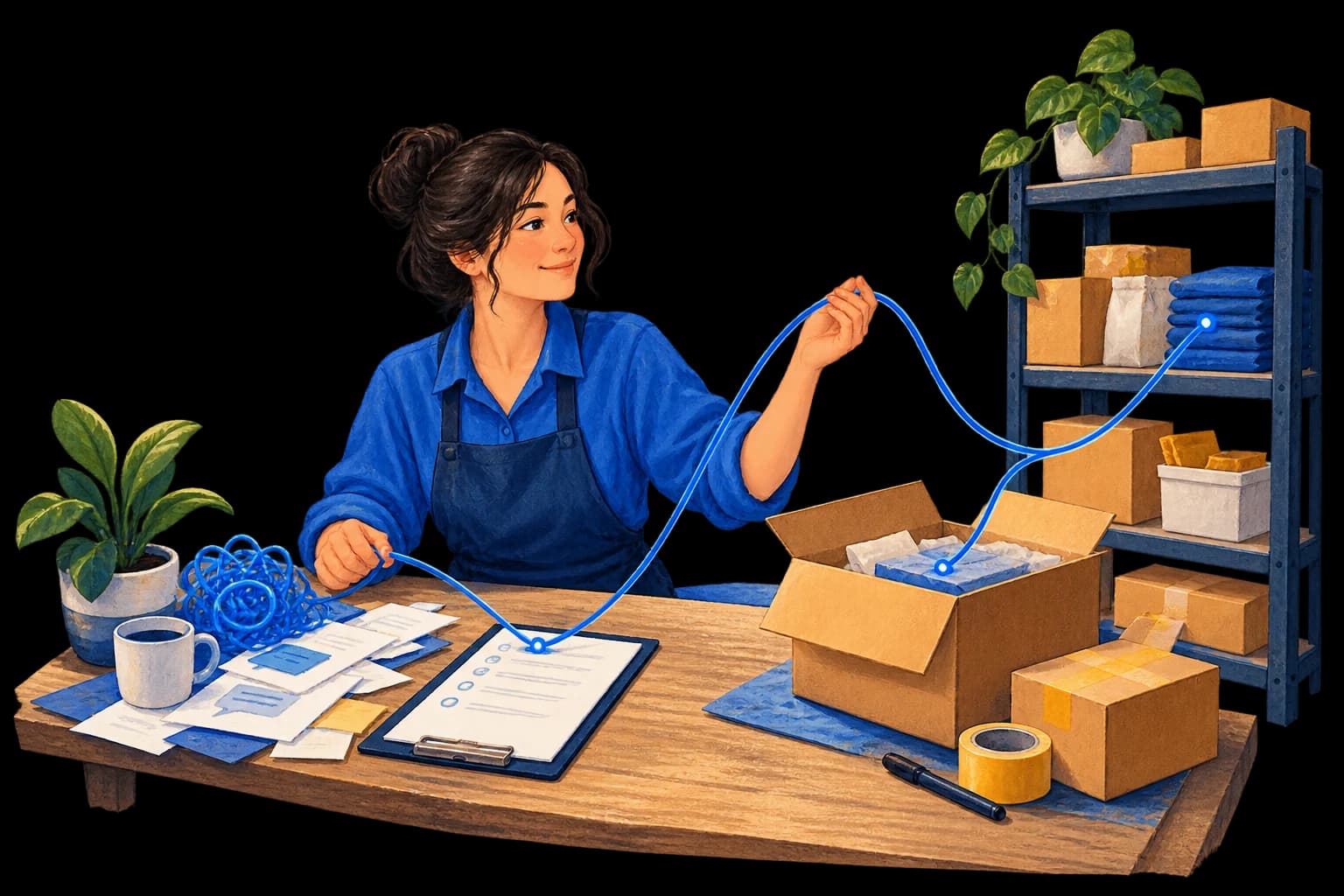
The difficult part of buying is rarely just creating a purchase order. It is knowing what is needed, finding the latest supplier reply, checking a short delivery, and leaving a record the next person can trust.
When that work is scattered across a spreadsheet, an inbox, and a stack of paper, the operator becomes the connection between them. We think software should take on more of that coordination.
Our ambition is simple: more time running your business, less time reconstructing what happened.
What we stand for
These are the principles we use to decide what is worth building—and what should become simpler.
The person placing an order may also be opening the store, covering a shift, and talking to customers. We design for that person. The next action should be clear without requiring them to become a systems administrator.
Your POS knows what sold. Your accounting system keeps the books. Your suppliers have their own way of working. We want to connect the work between those systems, so getting organized does not have to mean replacing the business you have already built.
A supplier reply can change the quantity, price, or delivery date of an order. That conversation belongs with the purchase, where the people affected can find it. Better buying should make life easier on both sides of the order.
A purchase order is a plan. A delivery and a physical count tell you what happened. Receiving and counting deserve as much attention as ordering, because the next buying decision is only as useful as the stock record behind it.
Reading supplier replies and preparing order recommendations can remove repetitive work. But an answer needs context, and a change needs a history. Our principle is straightforward: people should understand the recommendation and stay accountable for the decisions they authorize.
The buyer, the receiver, and the person counting the shelves may work different shifts. An order should carry its supplier conversation, changes, and receiving history with it. Good software helps a team share responsibility without losing the details.
Belief, put to work
For a food business, a recipe cost is useful. But it cannot tell you whether the full delivery arrived or what is actually on the shelf. That is why our food workflow starts with the order, the receiving checklist, and the physical count.
A buying decision with stock, supplier, and pack-size context.
Explore orderingA checklist for what actually came through the door.
Explore receivingA physical check that informs the next buying decision.
Explore inventoryThe same principle carries into retail, manufacturing, and supplier operations: keep the buying decision connected to what happens next.
A standard you can hold us to
That is how we want LineNow to be judged: by the work it helps people do. Read what customers say, see the workflow, and decide whether it fits your business.
“They bring strong technical knowledge without losing sight of day-to-day operational needs.”
The business is yours
Show us how buying works in your business. We’ll walk through where LineNow fits, what it connects, and what your team would do next.
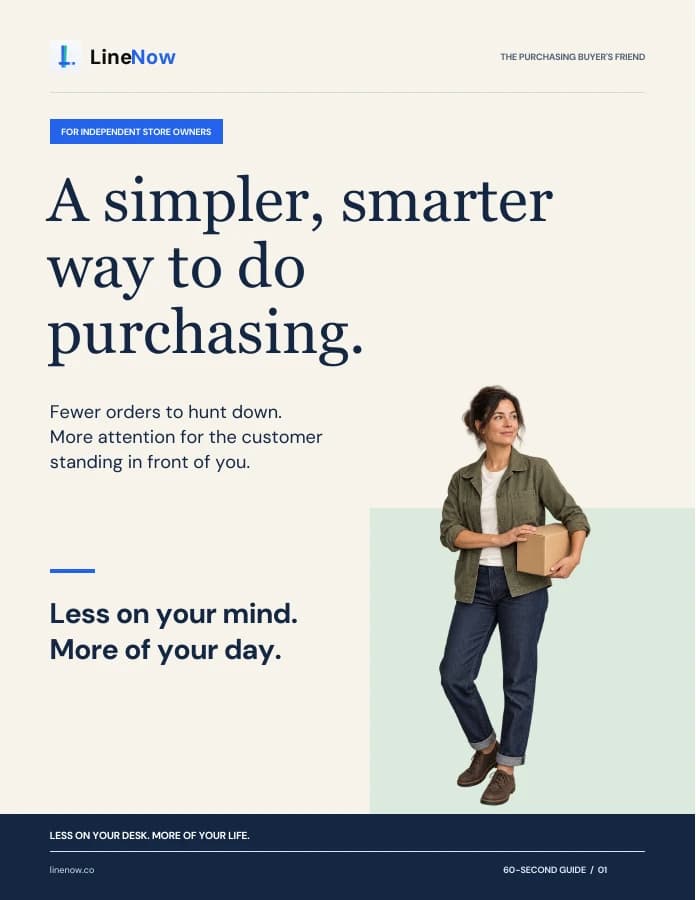
A useful next read · Free whitepaper
Keep the order, supplier reply, delivery, and bill easier to follow. Spend less of your day hunting for buying answers.
Instant PDF download. Only email required.