
Keep food costs in check.

Give the next shift more than an order confirmation. LineNow connects supplier orders, receiving checklists, and physical counts — so the team knows what was ordered, what arrived, and what is left before buying again.


A buying scenario
A restaurant buyer coordinates orders across kitchens using messages and supplier websites. The immediate need is a repeatable ordering process; recipe setup and a POS rollout can follow in stages.
Illustrative scenario. Use it to plan your evaluation; it is not a customer results claim.
Can the buyer keep each kitchen’s order, supplier reply, and receipt together?

Talk through your supplier workflow with a LineNow team member before you start.
I have saved thousands of dollars a month on my own time and ordering strategy. It's a relief to know you're doing the right thing, and incredibly quickly.How Verve Bowls orders in 40 minutes, not 6 hours →

This is a great app. It does exactly what we need it to doHow Living Fit automated dropship POs in days →

Food-cost problems often begin between the order, the delivery, and the stock count.
One connected workflow for the buyer, the receiver, and the person counting the shelves.
Build purchase orders from stock and par levels, review the supplier and pack sizes, then send. Supplier replies stay with the order so the person receiving is not starting from a separate spreadsheet.
Print a receiving checklist with ordered items, pack sizes, and quantities already received or still due. For locations receiving through LineNow, its QR code opens that order on a phone without a login.
Print a count checklist for selected items at one inventory location. Scan its QR code to open the same list on a phone, enter the physical quantities, then review and apply the counts to inventory.
Keep supplier prices and pack sizes with the ingredients you buy. Add recipe quantities when you need dish-level cost estimates; physical receiving and counting still establish what actually came in and what is left.
Store credentials for supplier ordering portals so your team can access saved supplier sites without hunting for passwords. One click opens the portal record your team already uses.

| Dish | Menu Price | Food Cost | Margin |
|---|---|---|---|
| Ribeye Steak | $38 | $16.42 | 56.8% |
| Lobster Pasta | $32 | $13.12 | 59.0% |
| Wagyu Burger | $24 | $9.84 | 59.0% |
| Item | Expected | Actual | Variance |
|---|---|---|---|
| Atlantic Salmon | 42 lbs | 58 lbs | +$384 |
| Avocados | 120 ct | 168 ct | +$216 |
| Heavy Cream | 18 gal | 26 gal | +$192 |
| Chicken Breast | 85 lbs | 104 lbs | +$171 |
| Supplier | Items | Total | Status |
|---|---|---|---|
| Pacific Meats | 6 | $1,240 | Ready |
| Harbor Seafood | 4 | $890 | Ready |
| Valley Produce | 8 | $445 | Ready |
LineNow does not try to become your POS, inbox, ERP, or accounting file. It turns those records into supplier work, then sends clean updates back.

Demand signals
POS and sales channels
Connected sales, menus, catalogs, customer orders, and on-hand signals where supported

Supplier channel
Email and messages
Confirmations, substitutions, ETAs, backorders, price changes

Records out
Accounting, ERP, inventory
Bills, received quantities, costs, shipments, compliance records
LineNow work layer
The part your systems do not own
One order record carries the decision, supplier conversation, receiving variance, and downstream handoff.
The next shift starts with the same record
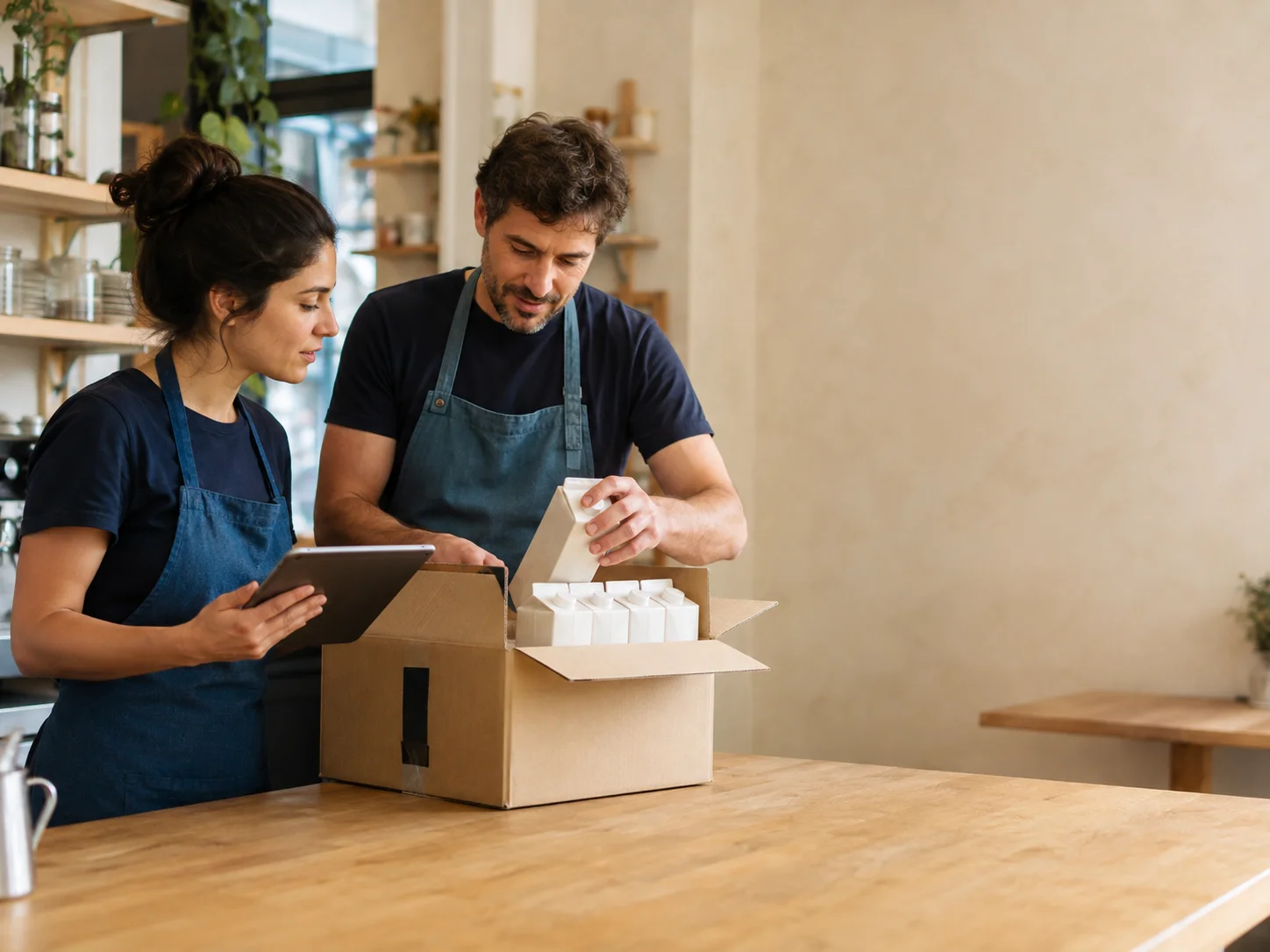
Keep supplier orders, receiving checklists, and inventory counts connected across shifts. In the café example, six of eight cases arrive: 72 cartons received and 24 still due. Carry that delivery evidence into food-cost review.


Estimate the value of time you could recover from purchasing work. Choose your own hourly value and hours saved; these are assumptions, not a forecast of your results.
Time value is not guaranteed cash savings. Assumes one $100/mo business unit after the 90-day free trial; excludes setup costs and taxes. Hours × 52 ÷ 12 × hourly value − $100.